
Many drivers use the terms down payment and first month payment as if they mean the same thing. In car insurance, that is not always true. Sometimes the amount due to start a policy is roughly the same as the first monthly installment. In other cases, the upfront amount is structured differently and may be higher or lower than what a driver expects when they see a monthly quote.[1][3]
That distinction matters because shoppers often focus only on the advertised monthly number. What actually determines whether you can start coverage today is the amount due at checkout, the effective date, and how the rest of the billing schedule is structured after the first payment is processed.[2][6]
Quick Answer
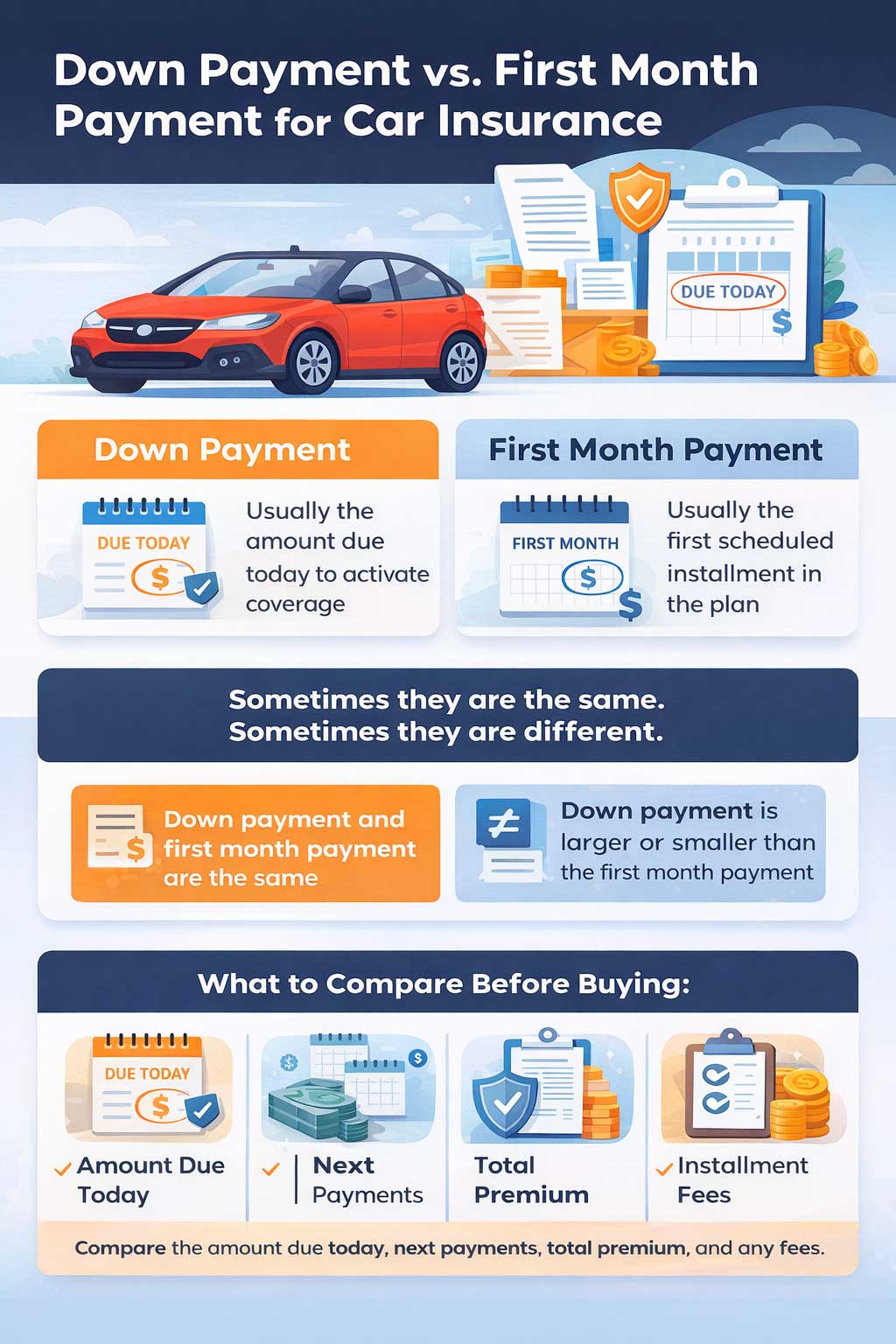
A car insurance down payment usually means the amount you must pay upfront to start the policy. The first month payment usually means the first installment in the billing schedule. Sometimes those two numbers are the same. Sometimes they are not. The safest way to compare quotes is to ask for the amount due today, the total premium, the remaining installment schedule, and any fees tied to paying monthly.[4]
Important: Exact billing structures, upfront requirements, and installment schedules can vary by insurer, state, payment plan, driving history, and vehicle type.[3][5]
What Down Payment Usually Means in Auto Insurance
In auto insurance, down payment usually means the initial amount required before coverage begins. Progressive explains that reputable zero-down auto insurance does not really exist and that legitimate insurers require money upfront before selling a policy. It also explains that this down payment is typically part of the total premium, not a separate fee added on top.[1]
That is why no money down language can be confusing. The phrase sounds like a policy can begin with nothing due, but reputable carriers still require an initial payment. In practice, the real question is not whether there is a true zero-dollar start. It is whether the upfront requirement is manageable for your budget today.[1]
What First Month Payment Usually Means
The first month payment usually means the first scheduled installment under a monthly or installment billing plan. That sounds straightforward, but insurers do not all structure installment plans the same way. GEICO explains that policyholders may pay in full or through installment-based payment options, which means the amount due at the start can be structured differently from later payments depending on the plan you choose.[3]
So if one quote says “$110 per month” and another says “$110 first month,” that still may not tell you enough. One carrier may want a different initial amount to activate the policy and then spread the rest over future installments. Another may keep the payments more even. What matters is the actual billing breakdown, not the label alone.[3]
When the Two Amounts Are the Same
The down payment and the first month payment can be effectively the same when the insurer structures the policy so that your upfront amount is simply the first monthly installment. That is one reason low-down-payment advertising can sound believable: some offers are really describing a billing setup where you are not paying much more than the first scheduled month to activate coverage.[1][3]
For shoppers with tight cash flow, that kind of structure can make a policy easier to start today. But you should still check the rest of the payment schedule before choosing a quote, because a low first payment does not automatically mean the total policy cost is lower. If you are focused on the full math, our no down payment car insurance total cost guide goes deeper into that tradeoff.
When the Two Amounts Are Different
They differ when the insurer requires an initial amount that does not match one regular monthly installment. This happens when the carrier collects a different share of the premium at the start and then spreads the remaining balance across later payments. That means the amount due today may be larger or smaller than what a shopper casually thinks of as one month’s payment.[3]
That difference is exactly why shoppers should not assume the first number and the later monthly numbers are automatically identical. The cleaner way to compare a quote is to ask what is due to activate coverage, what happens after that, and whether any installment or payment-method fees apply.[3][4]
| Term | What It Usually Means | Why It Matters |
|---|---|---|
| Down payment | Amount due upfront to start the policy | This is the number that determines whether you can activate coverage today |
| First month payment | First installment in the billing schedule | This may or may not match the exact amount due at checkout |
| Total premium | Full policy cost for the term before installment timing is considered | This helps you compare the real cost instead of only the opening payment |
Why the Amount Due Today Can Be Higher Than You Expected
The first reason is simple: insurers price policies based on underwriting and rating, and the premium itself changes based on the driver, vehicle, coverage choices, limits, and deductibles. The billing plan then affects how much of that premium is collected at the start.[5][6]
The second reason is that payment structure varies by carrier. Some insurers front-load more of the premium into the initial payment, while others spread it more evenly. That is why two quotes with similar total premiums can still show very different due today numbers.[3]
A third issue is installment cost. GEICO notes that if you pay your premium in installments, setting up automatic payments from a bank account can save money on installment fees. So the way you choose to pay can affect the real cost of a monthly plan, even when the headline premium looks manageable.[4]
How To Compare Quotes Without Getting Misled
The NAIC advises shoppers to compare quotes using the same coverages and limits and to provide the same information to each company. That is especially important here, because comparing a low upfront payment on one quote against a broader or different coverage setup on another is not a fair comparison.[6]
When you compare offers, ask these practical questions before you buy:
- How much is due today to start the policy?
- Is that amount just the first month, or a different starting amount?
- What is the total premium for the full policy term?
- How many remaining installments will I owe, and in what amounts?
- Are there installment fees or savings for automatic payments?
- When does coverage become effective after payment is processed?
If you ask those questions, you will usually get a clearer picture than you would from a simple low down payment label. It also makes your quote comparison more honest, especially if you are deciding between liability-only and broader protection. For shoppers reviewing protection levels, our compare full coverage car insurance quotes page can help frame the coverage side of the decision.
Why This Matters Even More for Same-Day Coverage
If you need insurance today, the timing of payment matters just as much as the amount. Progressive explains that same-day coverage is often possible, but you should expect to make an initial payment before the policy starts. In other words, the practical trigger is not the marketing phrase on the quote page. It is the completed payment and confirmed effective date.[2]
That is why the best same-day shoppers focus on three numbers at once: amount due today, next payment amount, and total premium. Looking at only one of those can make a policy seem cheaper or easier to start than it really is. If immediate activation is part of your decision, review this page alongside our same-day car insurance guide.
What About Financed or Leased Vehicles?
If your vehicle is financed and you fail to keep proper insurance in place, the lender may have the right to obtain force-placed insurance. The CFPB explains that this insurance protects the lender, not you, and is usually much more expensive than a policy you find yourself.[7]
That does not mean every financed-car shopper must buy the exact same coverage setup in every situation, but it does mean the cost of letting coverage lapse can be much worse than carefully comparing quotes now. If you are trying to balance broader protection against affordability, our affordable full coverage car insurance guide is the better next read.
Best Rule for Quote Comparison
Do not compare one quote’s monthly payment against another quote’s down payment as if they are automatically the same thing. Compare amount due today, remaining installments, fees, effective date, and total premium together.[3][4][6]
FAQ About Down Payment vs. First Month Payment
Is a car insurance down payment always separate from the first month?
No. Sometimes the upfront amount effectively is the first month’s premium. Other times the insurer uses a different initial structure, so the amount due at the start does not match a regular monthly installment.[1][3]
Can a low down payment quote still cost more overall?
Yes. A lower opening payment does not automatically mean a lower total premium. It may simply mean more of the policy cost is being collected later, or that installment fees and payment structure change the overall math.[3][4]
When does coverage usually start?
Coverage is typically effective after the payment is processed and the policy is set to begin, which is why the amount due today and the effective date matter so much for same-day shoppers.[2]
What should I ask for when comparing quotes?
Ask for the total premium, the amount due today, the installment schedule, any fees, and confirmation that the quotes use the same coverage limits and information. That is the most reliable way to compare like for like.[4][6]
Final Thoughts
The difference between a car insurance down payment and a first month payment is really a difference between starting cost and billing structure. Sometimes they line up. Sometimes they do not. The mistake is assuming every low down payment offer means the exact same cash requirement or the exact same long-term cost.
If you want to compare quotes the smart way, look beyond the headline monthly figure. Focus on what is due now, what is due next, how the rest of the schedule works, and what the total premium looks like for the term. That is the cleaner, safer way to shop in a topic where wording can easily blur the real cost.
Compare Quotes With the Real Upfront Cost in Mind
Enter your ZIP code to review quote options, compare the amount due today, and move forward with a policy that fits your timing and budget.
References
- Progressive – Can I Get Car Insurance With No Down Payment? ↩
- Progressive – Can You Get Same-Day Car Insurance? ↩
- GEICO – Car Insurance Payments: Methods and Plans ↩
- GEICO – Frequently Asked Questions for Auto Policies ↩
- NAIC – Auto Insurance ↩
- NAIC – A Consumer’s Guide to Auto Insurance ↩
- CFPB – What Is Force-Placed Insurance? ↩